![Green Lab. #08 [ A Stone Assembly Alive with Moss ]](https://www.adana.co.jp/wp-content/uploads/sites/3/2026/01/gl08_img_ogp.jpg)
![Green Lab. #07 [ Forest Suspension Bridge]](https://www.adana.co.jp/wp-content/uploads/sites/3/2026/01/gl07_img_ogp.jpg)






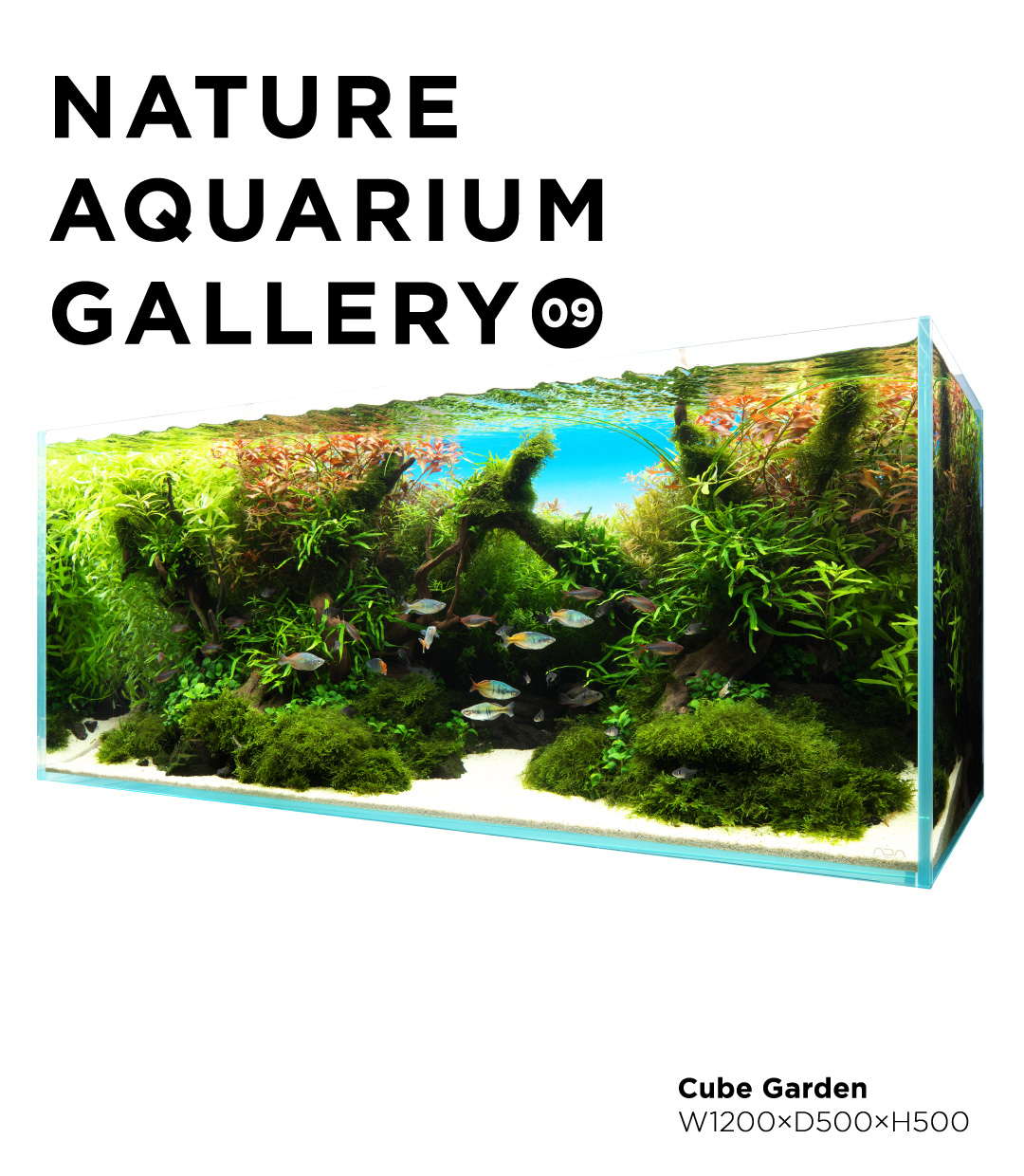
NATURE AQUARIUM GALLERY #09: “Drawn by New Growth”

At the Nature Aquarium Gallery, aquascapes are created and maintained every day. Through this ongoing work, ADA has developed a deep and practical knowledge of Nature Aquarium. In the web series NATURE AQUARIUM GALLERY, we interview ADA SUIKEI Creators and ADA’s expert maintenance staff to explore their creations and share tips on how to care for and grow aquatic environments using ADA products.
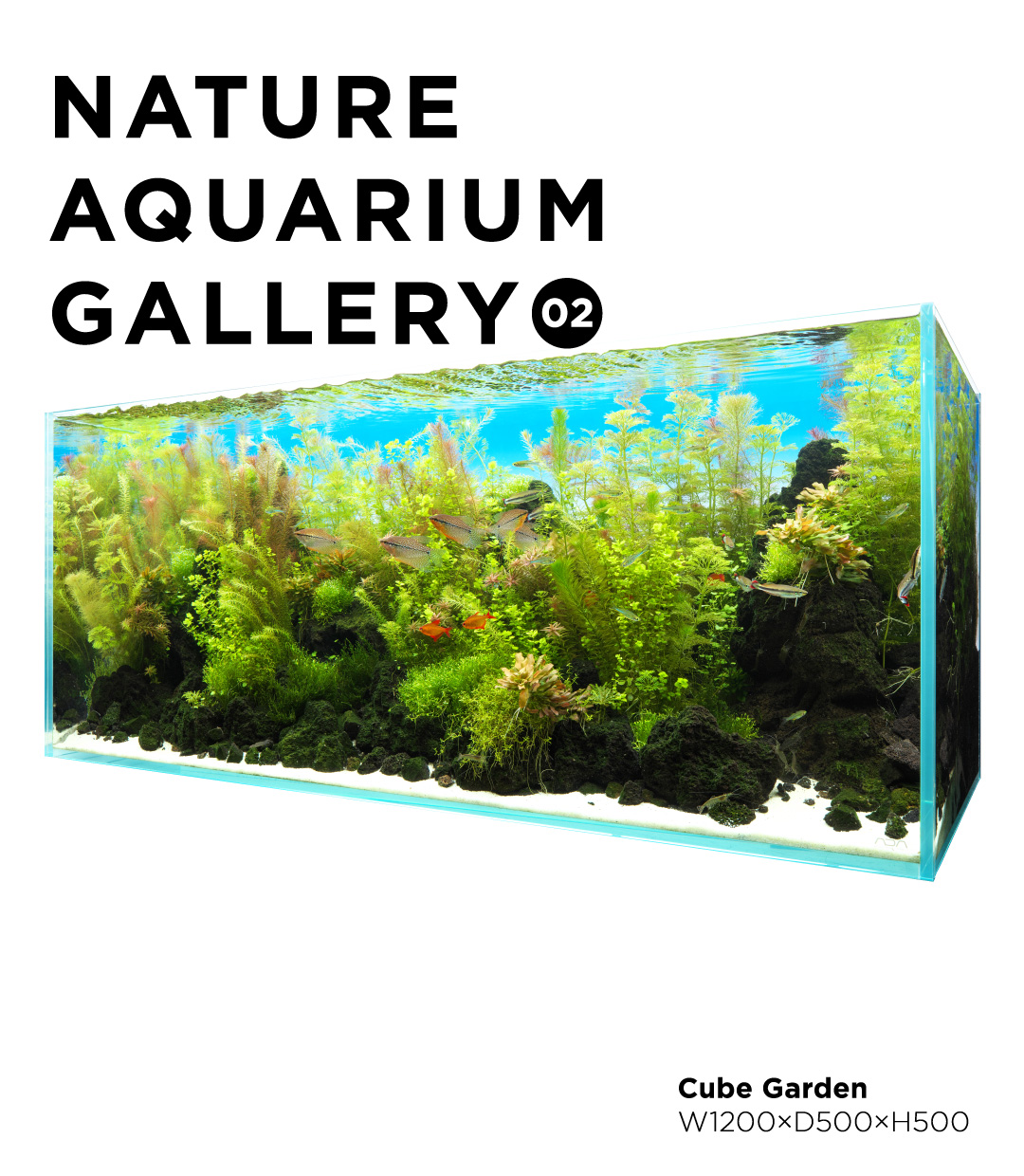
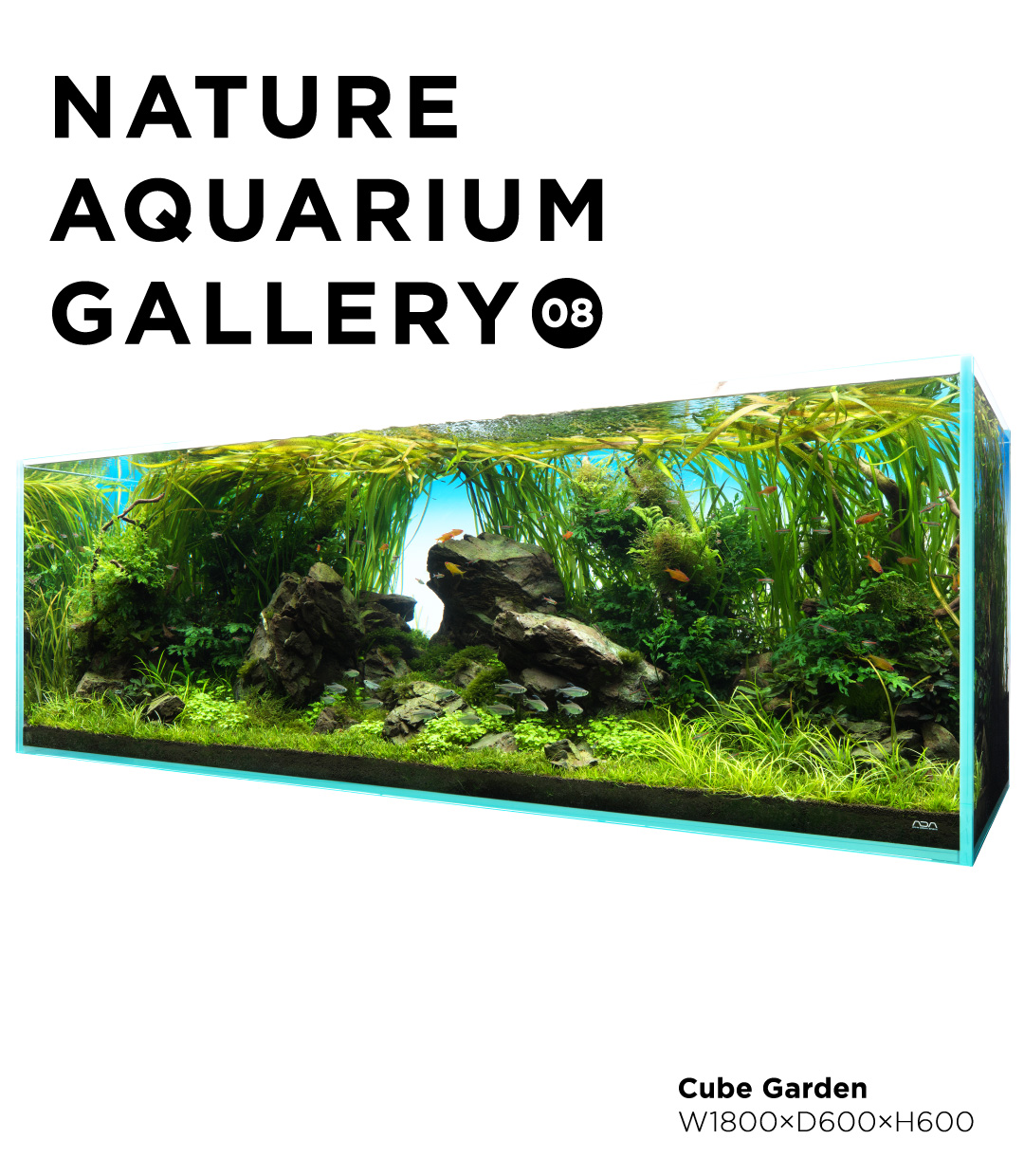
Memories of a childhood river—once a playground for catching fish—are transformed into a living habitat, breathing quietly within the aquarium.
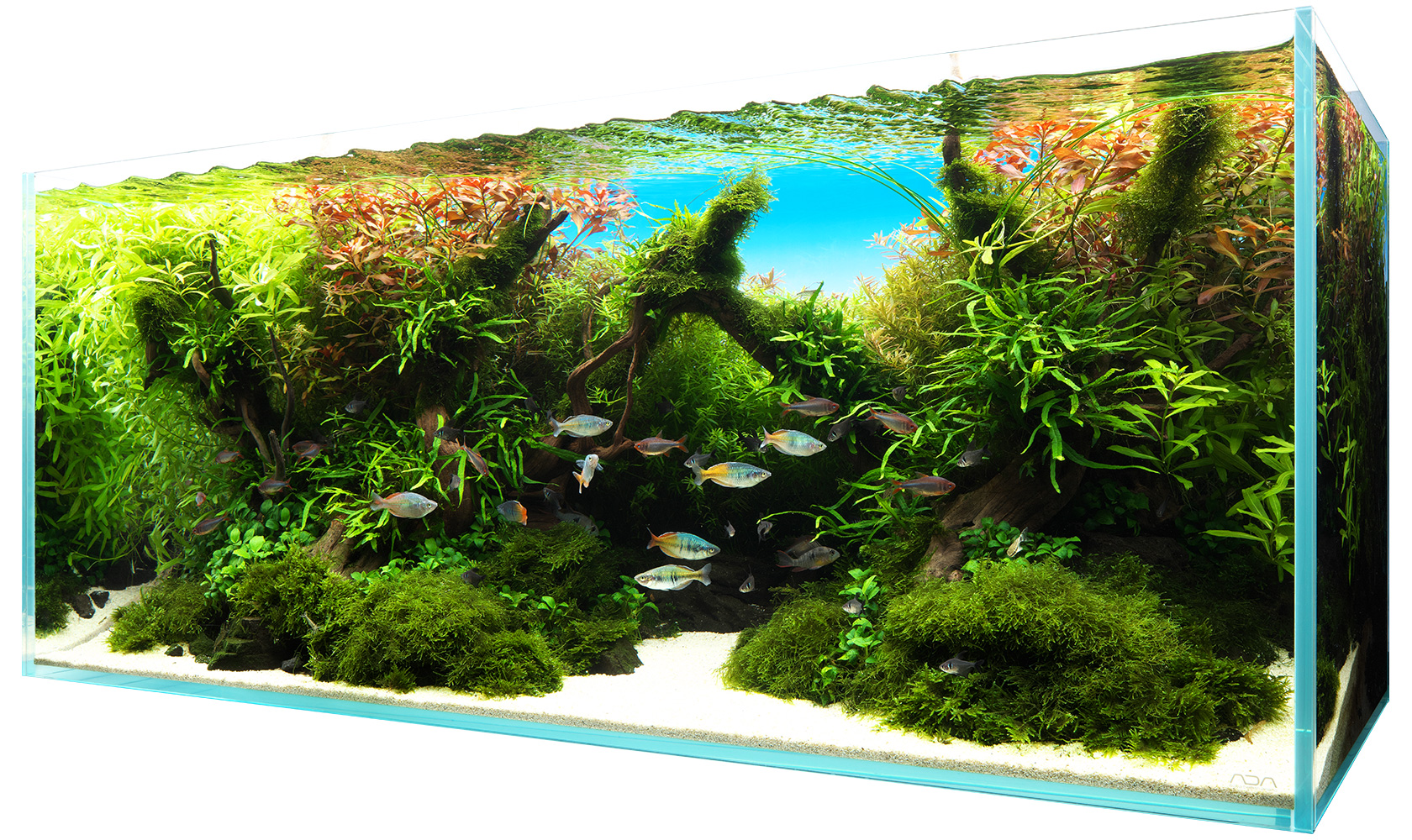
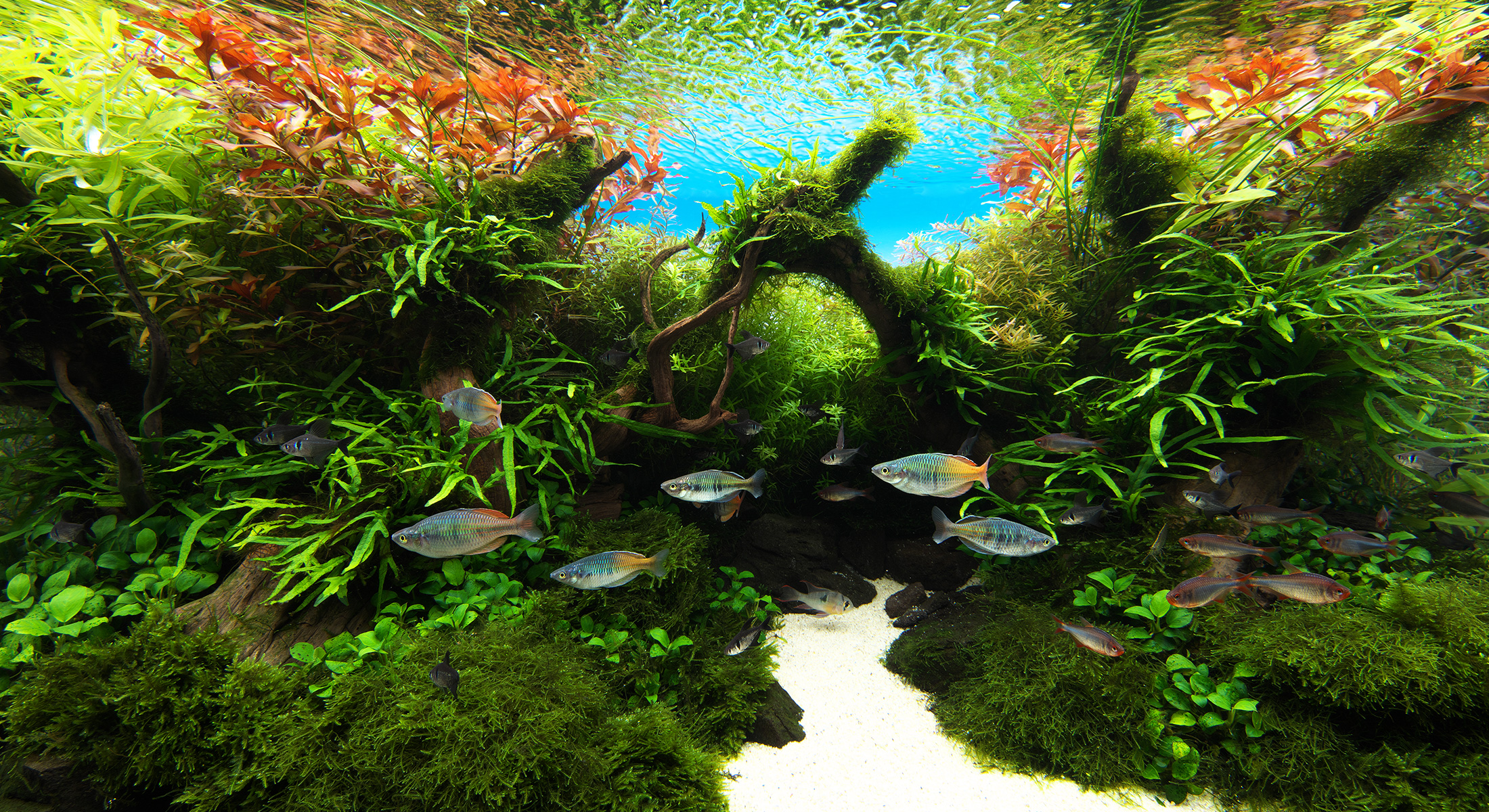
As a child, I spent countless hours catching fish in the river near my home, watching them intently in moments of stillness. Following those memories, this aquascape was created with the aim of providing a comfortable environment for fish, while also offering viewers a scene that brings a sense of calm and peace. Beneath the shadows cast by lush aquatic plants and driftwood, fish naturally gather, settling into a life of quiet security. Within this setting, they reveal their innate swimming behavior and vibrant natural coloration. The work stands as a faithful expression of the core principles of the Nature Aquarium.
DATA
Creation date: July 28, 2025
Photo taken on: November 12, 2025
Creator: Kazuki Yamamoto(ADA SUIKEI CREATOR)
Aquarium: CUBE GARDEN W1,200×D500×H500(mm)
Lighting: SOLAR RGB × 2 (8.5 hours per day)
Filtration: SUPER JET FILTER ES-1200 (BIO RIO G)
Material: BRANCH WOOD, SANSUI STONE
Substrate: LA PLATA SAND, AQUA SOIL – AMAZONIA VER.2,
POWER SAND ADVANCE M, BACTER 100, DOOA JUNGLE BOTTOM,
CLEAR SUPER, TOURMALINE BC
CO2: POLLEN GLASS BEETLE 40Ø, 5 bubbles per second via CO2 TWIST COUNTER (using TOWER)
Aeration: 15.5 hours after the light is turned off using LILY PIPE P-6
Additives: BRIGHTY K, GREEN BRIGHTY MINERAL, GREEN BRIGHTY IRON, GREEN BRIGHTY NITROGEN
Water change: 1/3 once a week
Water quality: Temperature 25°C, pH: 6.4, TH: 50 mg/L
Plants
Rotala rotundifolia ‘Green’
Hygrophila polysperma
Rotala rotundifolia ‘Greenred’
Rotala rotundifolia ‘Hra’
Ludwigia glandulosa
Rotala rotundifolia ‘Ceylon’
Eriocaulon sp. ‘Social Feather Duster’
Leptochilus sp. ‘Trident’
Anubias barteri var. nana ‘Petite’
Taxiphyllum barbieri
Taxiphyllum sp. ‘peacock moss’
Fish
Melanotaenia boesemani
Megalamphodus megalopterus
Hyphessobrycon coelestinus
Mikrogeophagus altispinosus
Crossocheilus oblongus
Otocinclus sp.
Caridina multidentate
Creation date: July 28, 2025
Photo taken on: November 12, 2025
Creator: Kazuki Yamamoto(ADA SUIKEI CREATOR)
Aquarium: CUBE GARDEN W1,200×D500×H500(mm)
Lighting: SOLAR RGB × 2 (8.5 hours per day)
Filtration: SUPER JET FILTER ES-1200 (BIO RIO G)
Material: BRANCH WOOD, SANSUI STONE
Substrate: LA PLATA SAND, AQUA SOIL – AMAZONIA VER.2,
POWER SAND ADVANCE M, BACTER 100, DOOA JUNGLE BOTTOM,
CLEAR SUPER, TOURMALINE BC
CO2: POLLEN GLASS BEETLE 40Ø, 5 bubbles per second via CO2 TWIST COUNTER (using TOWER)
Aeration: 15.5 hours after the light is turned off using LILY PIPE P-6
Additives: BRIGHTY K, GREEN BRIGHTY MINERAL, GREEN BRIGHTY IRON, GREEN BRIGHTY NITROGEN
Water change: 1/3 once a week
Water quality: Temperature 25°C, pH: 6.4, TH: 50 mg/L
Plants
Rotala rotundifolia ‘Green’
Hygrophila polysperma
Rotala rotundifolia ‘Greenred’
Rotala rotundifolia ‘Hra’
Ludwigia glandulosa
Rotala rotundifolia ‘Ceylon’
Eriocaulon sp. ‘Social Feather Duster’
Leptochilus sp. ‘Trident’
Anubias barteri var. nana ‘Petite’
Taxiphyllum barbieri
Taxiphyllum sp. ‘peacock moss’
Fish
Melanotaenia boesemani
Megalamphodus megalopterus
Hyphessobrycon coelestinus
Mikrogeophagus altispinosus
Crossocheilus oblongus
Otocinclus sp.
Caridina multidentate
Planting & Creation Tips
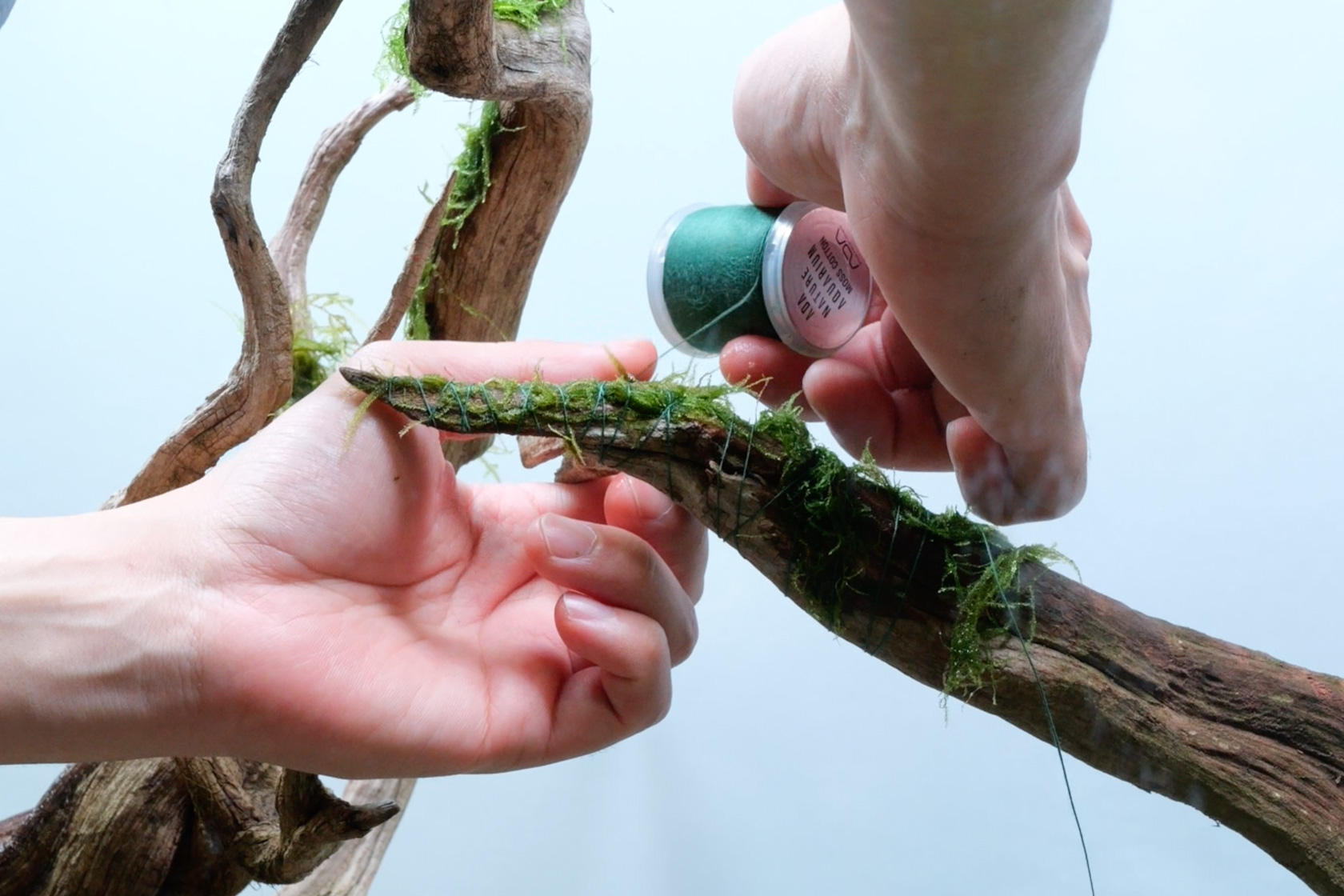
Attaching two types of moss to driftwood
Taxiphyllum barbieri was attached to the tips of the driftwood branches, while Taxiphyllum sp. ‘peacock moss’ was blended around the base, adding subtle variation to the moss layout.
The tying line was wrapped in a crossing pattern at roughly 5 mm intervals, ensuring the moss was firmly secured and allowing for stable, long-term attachment. Because Taxiphyllum barbieri has a strong ability to attach, MOSS COTTON was used, while TERRA LINE was selected for peacock moss, which has a weaker hold. The tying materials were chosen to suit the characteristics of each moss species.
Taxiphyllum barbieri was attached to the tips of the driftwood branches, while Taxiphyllum sp. ‘peacock moss’ was blended around the base, adding subtle variation to the moss layout.
The tying line was wrapped in a crossing pattern at roughly 5 mm intervals, ensuring the moss was firmly secured and allowing for stable, long-term attachment. Because Taxiphyllum barbieri has a strong ability to attach, MOSS COTTON was used, while TERRA LINE was selected for peacock moss, which has a weaker hold. The tying materials were chosen to suit the characteristics of each moss species.
Maintenance & Cultivation Highlights
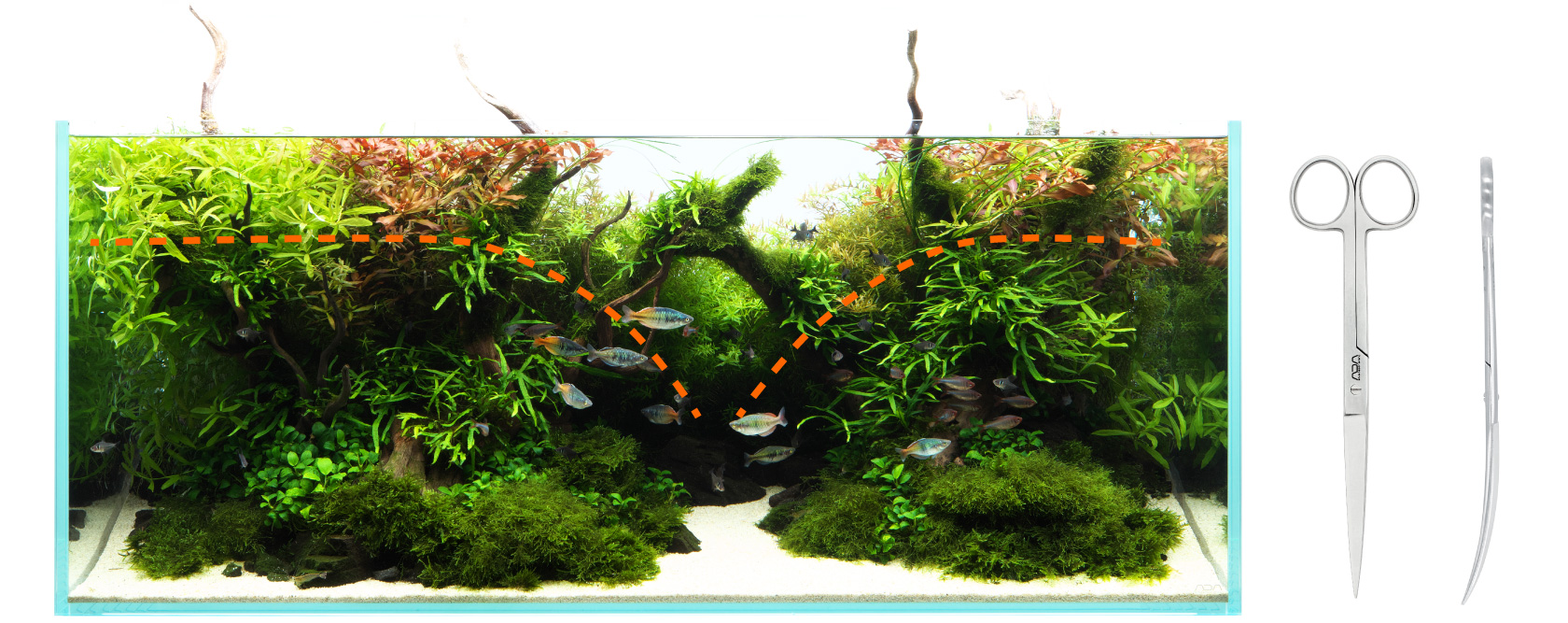
Trimming the central Rotala
When working with stem plants, the way space is controlled greatly influences the overall beauty of the aquascape. The Rotala positioned at the center responds well to trimming, and as the layout matures, its volume steadily increases. Without regular maintenance, it can easily encroach upon and fill the open space. To preserve the elegance of the concave composition, bold trimming is sometimes required, always with attention to the overall flow of the layout. For this work, the highly maneuverable PRO SCISSORS SHORT (Curved Type) were used.
When working with stem plants, the way space is controlled greatly influences the overall beauty of the aquascape. The Rotala positioned at the center responds well to trimming, and as the layout matures, its volume steadily increases. Without regular maintenance, it can easily encroach upon and fill the open space. To preserve the elegance of the concave composition, bold trimming is sometimes required, always with attention to the overall flow of the layout. For this work, the highly maneuverable PRO SCISSORS SHORT (Curved Type) were used.
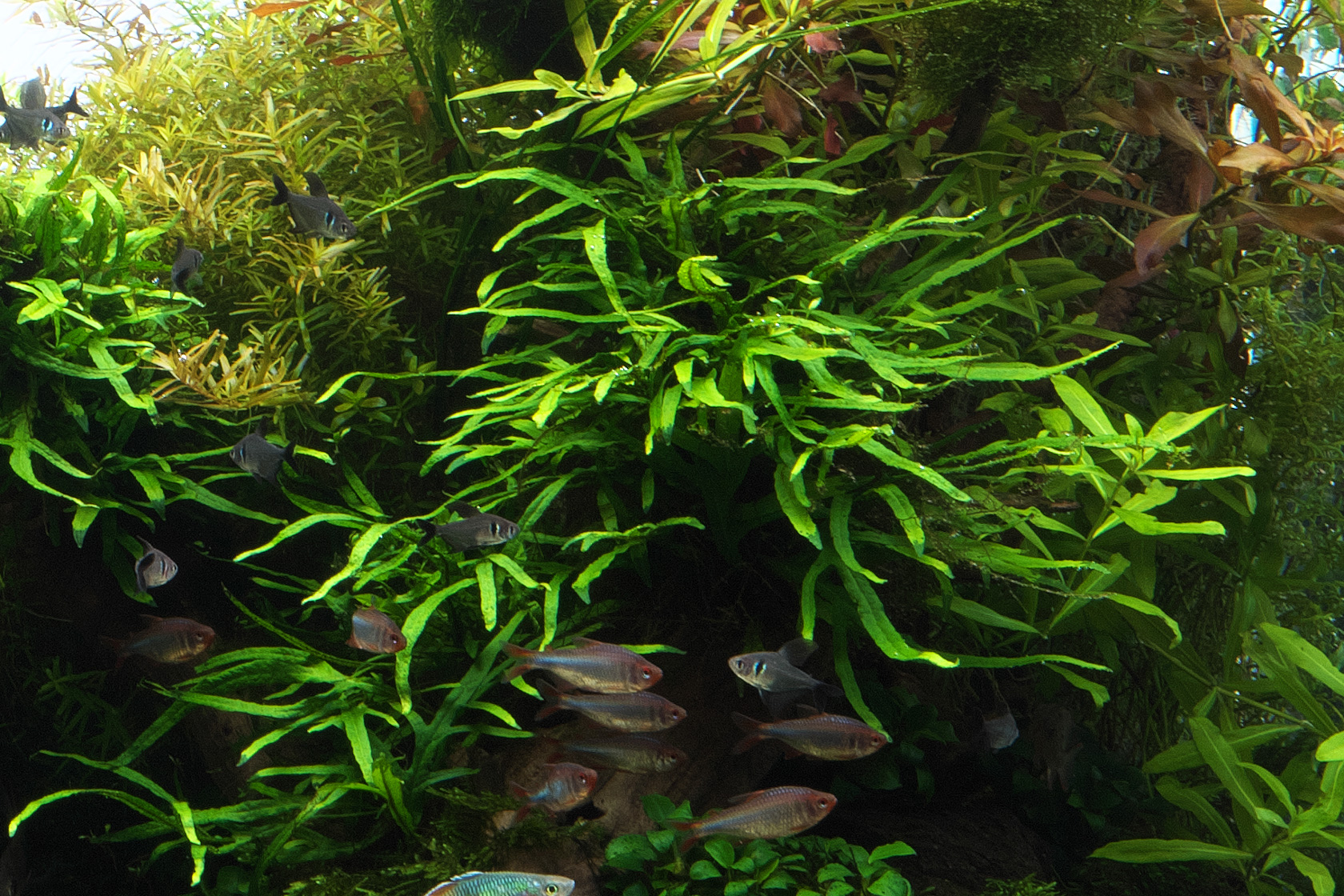
Shaping Leptochilus
By aligning the direction of its leaves, Leptochilus helps create a natural sense of flow within the aquascape. Leaves that were oriented toward the background or sideways were selectively thinned, and the plant was adjusted so the remaining leaves faced forward, maintaining balance throughout the scene. If plantlets begin to form frequently on the leaves, it is recommended to remove the plant from the driftwood and reattach it anew.
By aligning the direction of its leaves, Leptochilus helps create a natural sense of flow within the aquascape. Leaves that were oriented toward the background or sideways were selectively thinned, and the plant was adjusted so the remaining leaves faced forward, maintaining balance throughout the scene. If plantlets begin to form frequently on the leaves, it is recommended to remove the plant from the driftwood and reattach it anew.
On the Name “Leptochilus”
Leptochilus was formerly known as Microsorum. Advances in taxonomic research led to a revision of its scientific classification, resulting in a change to its current name. While the name has changed, the methods of cultivation and its use in aquascaping remain unchanged from the past.