![Green Lab. #08 [ A Stone Assembly Alive with Moss ]](https://www.adana.co.jp/wp-content/uploads/sites/3/2026/01/gl08_img_ogp.jpg)
![Green Lab. #07 [ Forest Suspension Bridge]](https://www.adana.co.jp/wp-content/uploads/sites/3/2026/01/gl07_img_ogp.jpg)






Green Lab. #07 [ Forest Suspension Bridge]

At Green Lab., we explore paludarium design through practical examples, sharing tips and techniques related to plant care, layout, and the creative process.
[Forest Suspension Bridge]
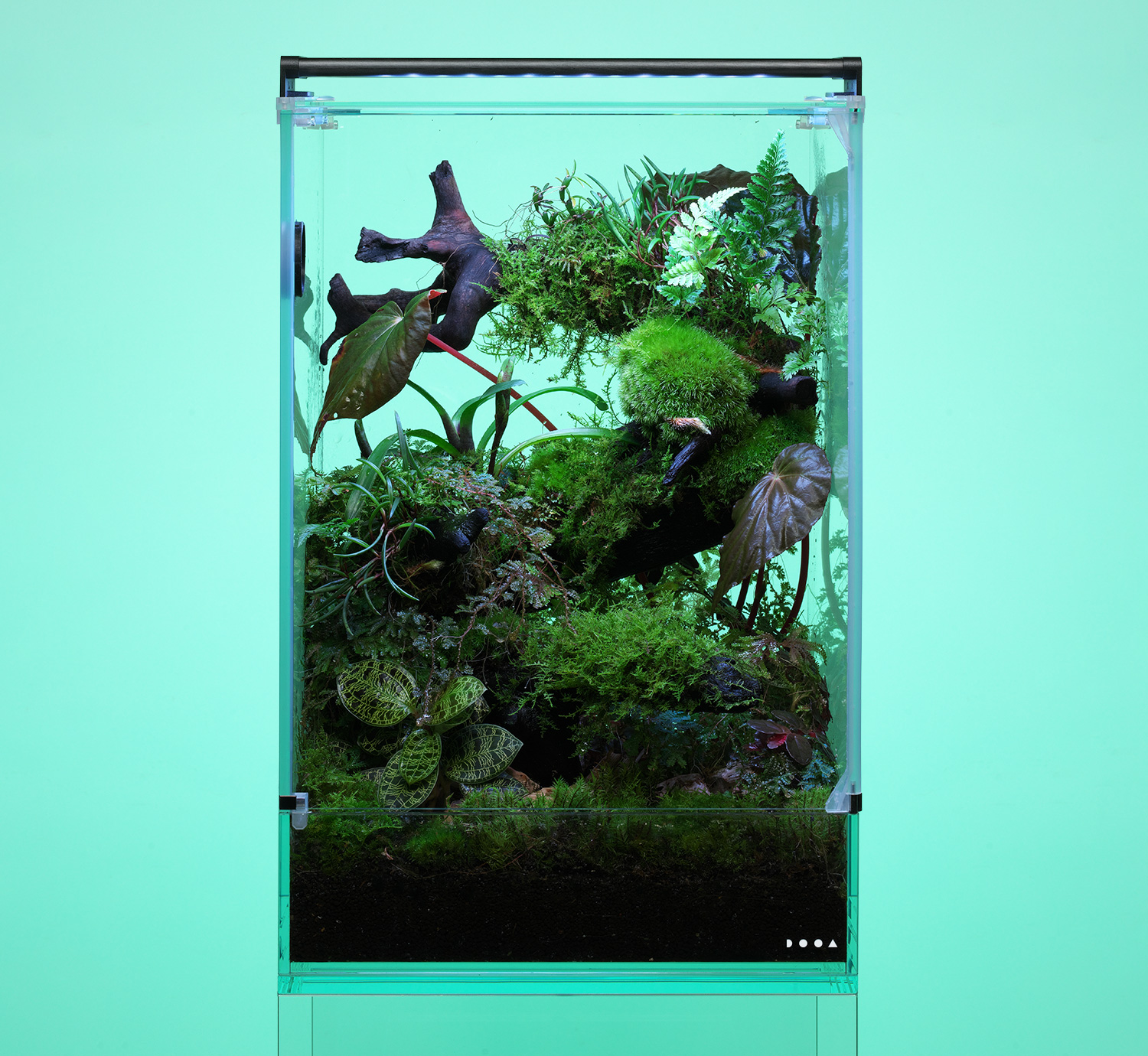
This paludarium presents a macro-style snapshot of branches stretching and intersecting through space, richly covered with thriving plants. The vegetation grows as if naturally embracing the three-dimensional structure, evoking both the inherent beauty of nature and its quiet sense of acceptance. By introducing window-like openings, the composition maintains strong plant growth while softening any feeling of visual density. Taking advantage of the Neo Glass Paluda design—where the rear panel is glass rather than a solid wall—this layout deliberately preserves a sense of depth and openness, making negative space an effective part of the overall composition.
DATA
Photo taken on: October 8, 2025
Creator: Daichi Araki (ADA SUIKEI CREATOR)
Aquarium: DOOA Neo Glass Paluda 300
Lighting: DOOA Paluda Light II 300 (8 hours per day)
Substrate: DOOA Jungle Soil, DOOA Jungle Base
Humidity control: Adjust to 55–65% using a hand spray
Drainage: Drain using the drainage parts approximately once a week
Plants
Macodes petola
Begonia pavonine
Neoregelia dungsiana
Procris repens
This paludarium presents a macro-style snapshot of branches stretching and intersecting through space, richly covered with thriving plants. The vegetation grows as if naturally embracing the three-dimensional structure, evoking both the inherent beauty of nature and its quiet sense of acceptance. By introducing window-like openings, the composition maintains strong plant growth while softening any feeling of visual density. Taking advantage of the Neo Glass Paluda design—where the rear panel is glass rather than a solid wall—this layout deliberately preserves a sense of depth and openness, making negative space an effective part of the overall composition.
DATA
Photo taken on: October 8, 2025
Creator: Daichi Araki (ADA SUIKEI CREATOR)
Aquarium: DOOA Neo Glass Paluda 300
Lighting: DOOA Paluda Light II 300 (8 hours per day)
Substrate: DOOA Jungle Soil, DOOA Jungle Base
Humidity control: Adjust to 55–65% using a hand spray
Drainage: Drain using the drainage parts approximately once a week
Plants
Macodes petola
Begonia pavonine
Neoregelia dungsiana
Procris repens
[Macodes petola]
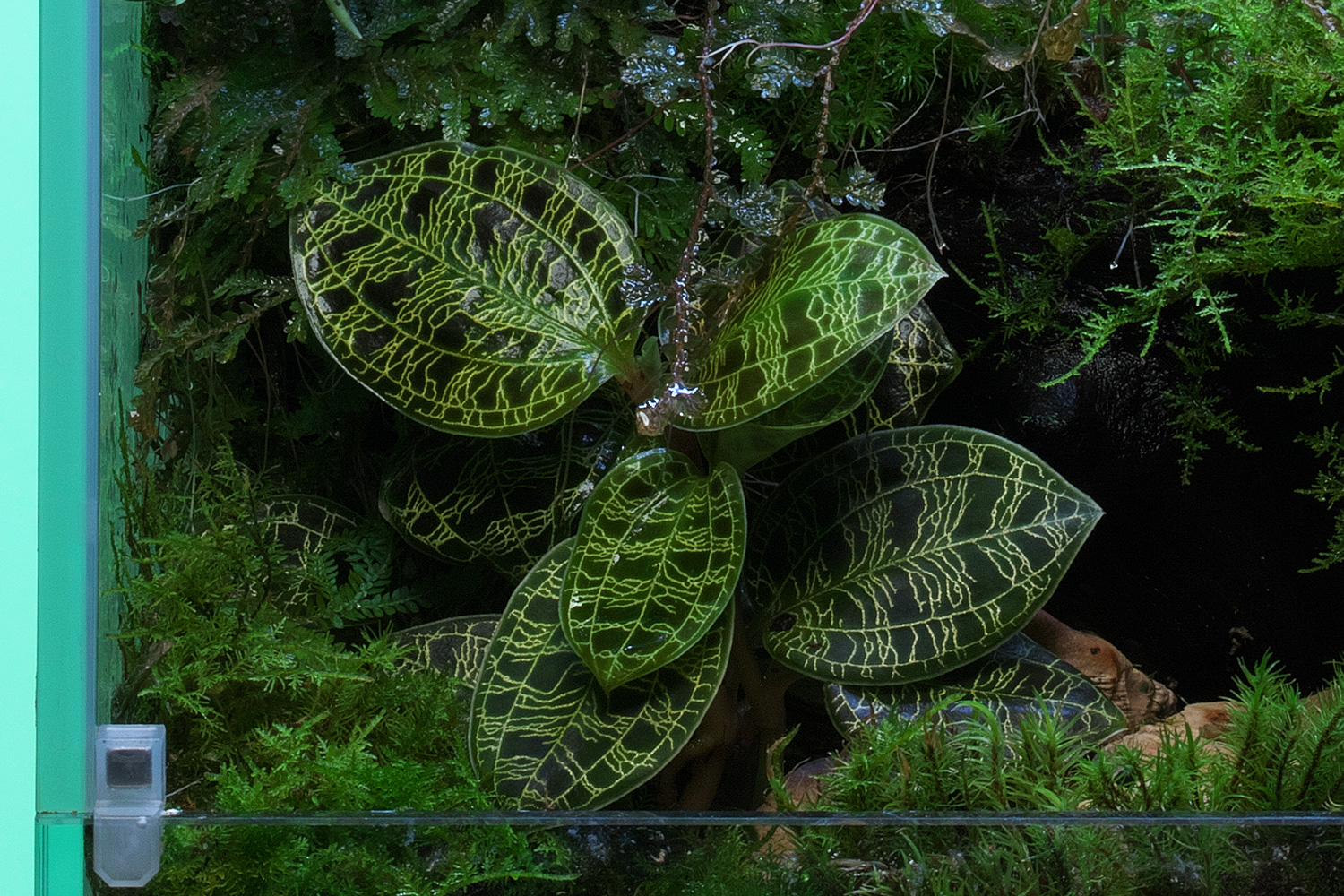
A classic jewel orchid species distinguished by golden veining set against deep green leaves. Naturally found in moist, shaded forest floors, it adapts well to low-light conditions. When planted in shadowed areas of the layout, the contrast of its leaf patterns becomes even more striking.
A classic jewel orchid species distinguished by golden veining set against deep green leaves. Naturally found in moist, shaded forest floors, it adapts well to low-light conditions. When planted in shadowed areas of the layout, the contrast of its leaf patterns becomes even more striking.
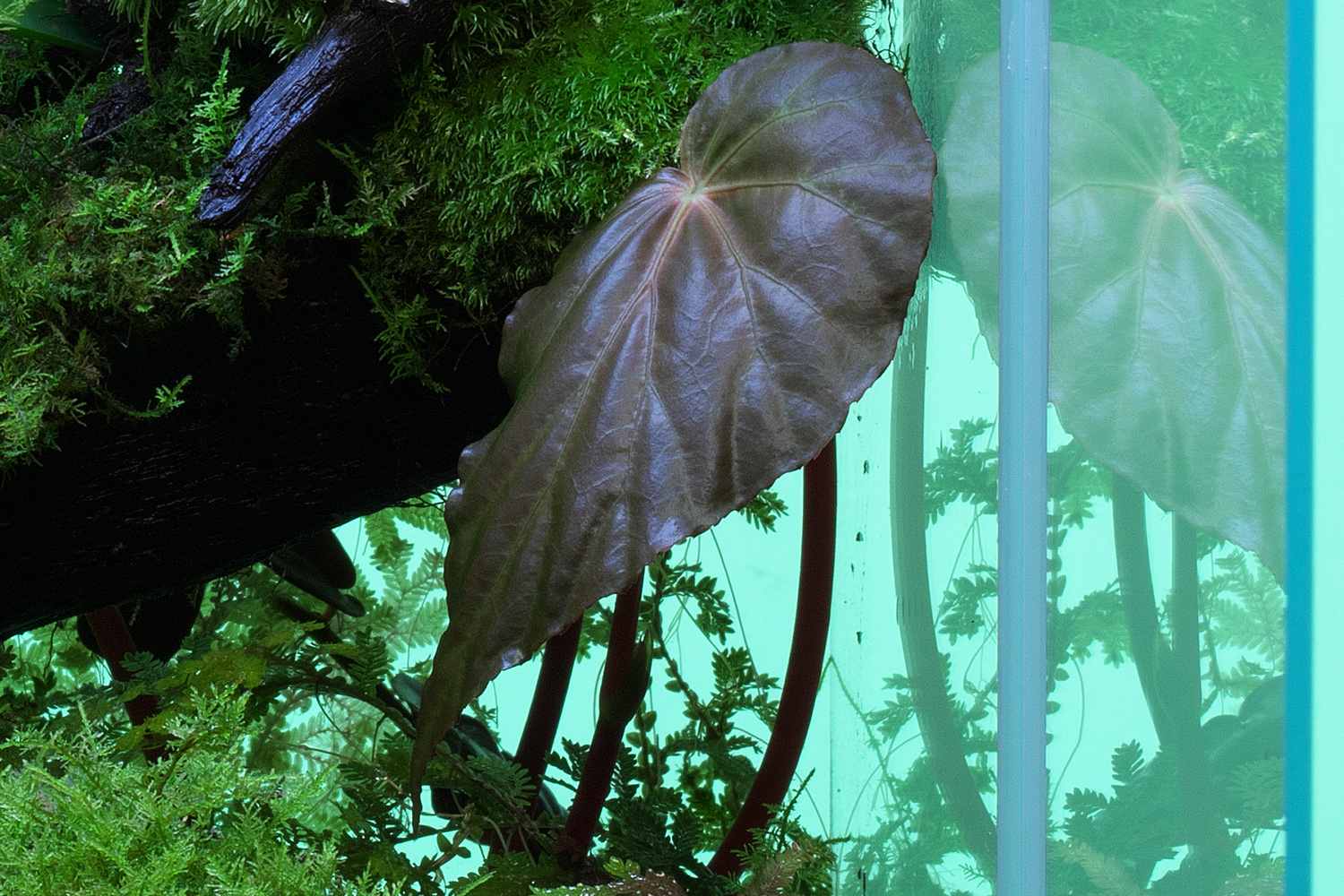
[Begonia pavonina]
This begonia is known for its blue iridescence, which shifts with the angle and intensity of light. The softer the lighting, the stronger the blue sheen becomes. Like Macodes petola, it benefits from being planted in the shade of driftwood and grown slowly to fully develop its coloration.
This begonia is known for its blue iridescence, which shifts with the angle and intensity of light. The softer the lighting, the stronger the blue sheen becomes. Like Macodes petola, it benefits from being planted in the shade of driftwood and grown slowly to fully develop its coloration.
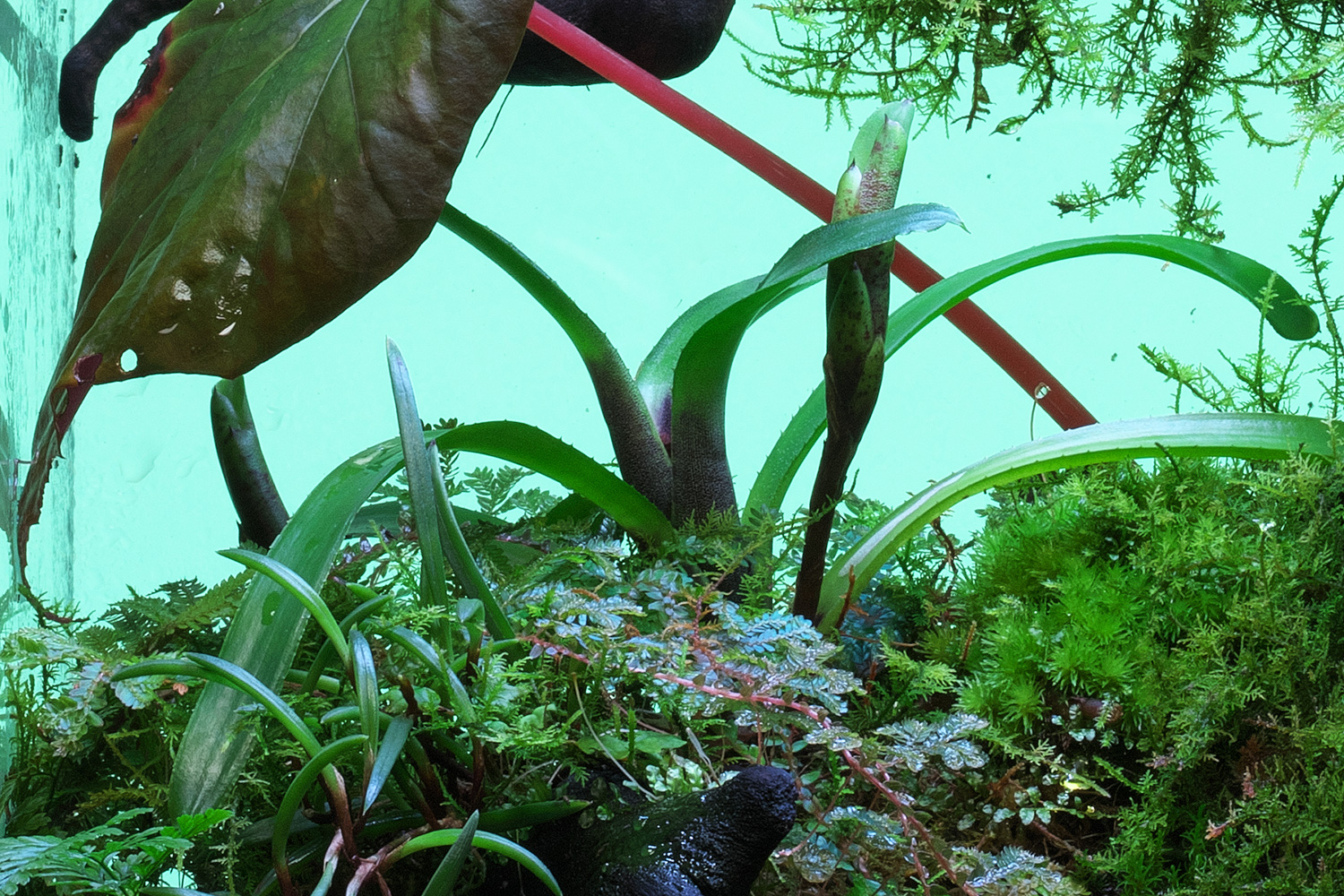
[Neoregelia dungsiana]
A small tank bromeliad native to Brazil. Because it prefers high light, it is mounted in a position where it receives ample illumination. As it matures, the rosette rises and develops beautiful coloration, making it an excellent accent within a three-dimensional composition.
A small tank bromeliad native to Brazil. Because it prefers high light, it is mounted in a position where it receives ample illumination. As it matures, the rosette rises and develops beautiful coloration, making it an excellent accent within a three-dimensional composition.
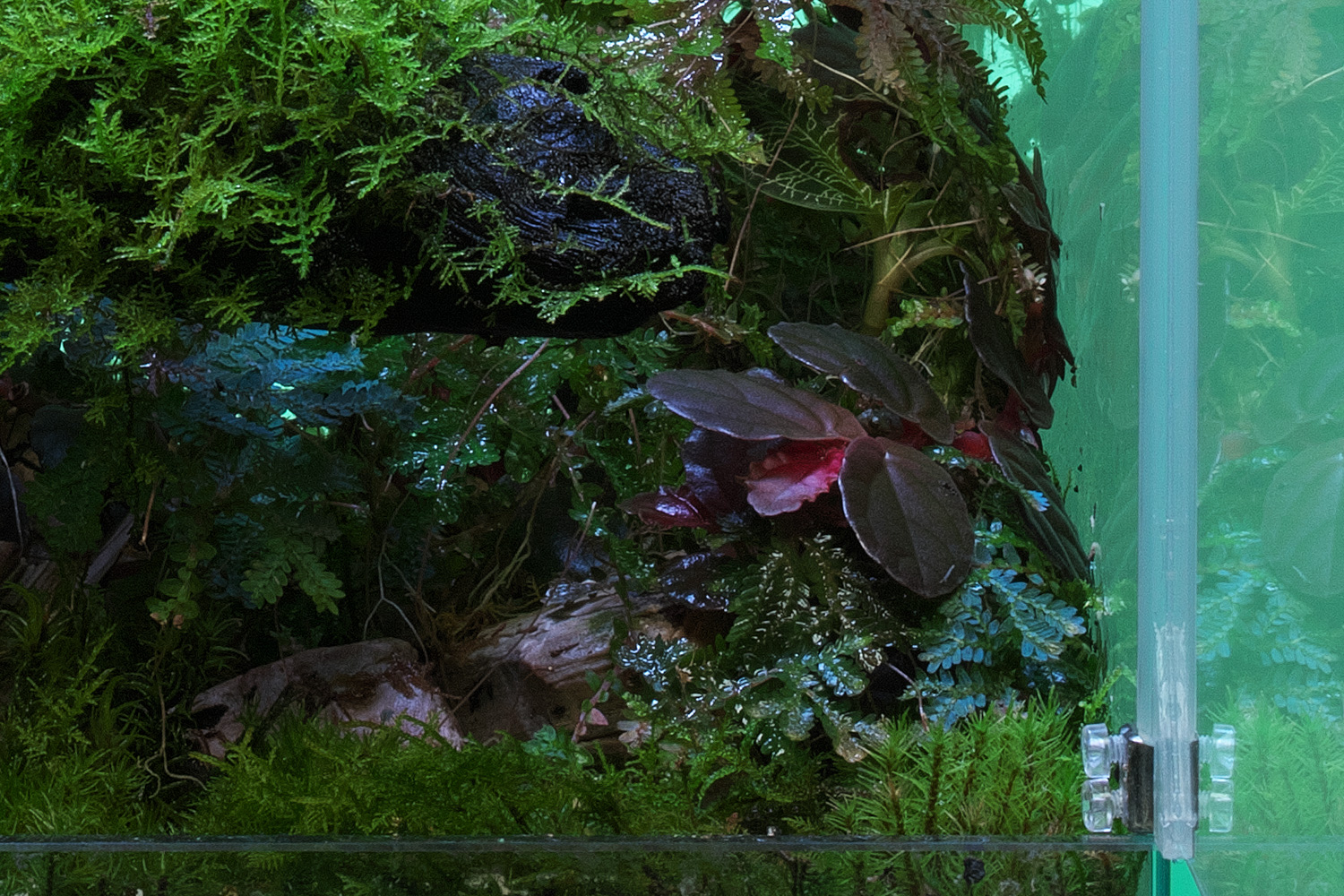
[Procris repens (formerly Pellionia repens)]
A creeping ground-cover plant that spreads across surfaces and walls. Subtle yet natural in appearance, it works well as a secondary plant that enhances the presence of the main focal species. Although its overall tone is calm, its new growth emerges with a reddish hue, creating an appealing color contrast with nearby Selaginella.
A creeping ground-cover plant that spreads across surfaces and walls. Subtle yet natural in appearance, it works well as a secondary plant that enhances the presence of the main focal species. Although its overall tone is calm, its new growth emerges with a reddish hue, creating an appealing color contrast with nearby Selaginella.
![Green Lab. #02 [ Karst Climber ]](https://www.adana.co.jp/wp-content/uploads/sites/3/2025/07/gl02_img_ogp.jpg)
![Green Lab. #03 [Perched on an Aged Branch]](https://www.adana.co.jp/wp-content/uploads/sites/3/2025/08/gl03_img_ogp.jpg)
![Green Lab. #04 [Until We Thrive Again]](https://www.adana.co.jp/wp-content/uploads/sites/3/2025/09/gl04_img_ogp.jpg)
![Green Lab. #05 [Jewels of the Forest Floor]](https://www.adana.co.jp/wp-content/uploads/sites/3/2025/10/gl05_img_ogp.jpg)